
An introduction to Local Economic Development
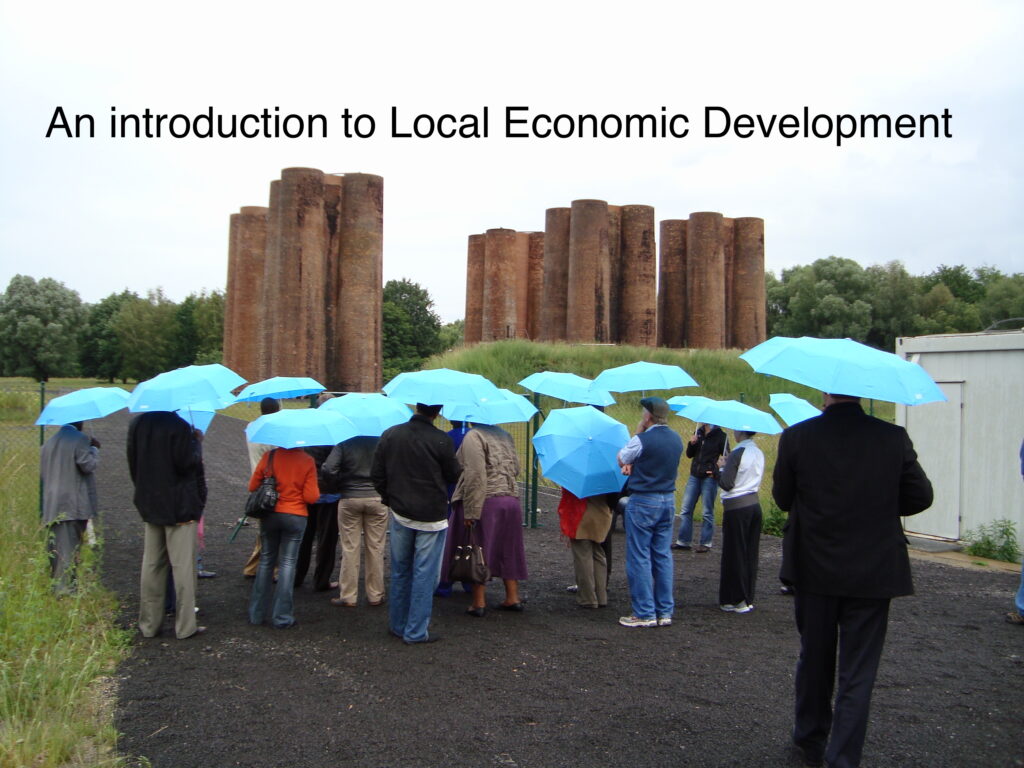
This course is an introduction to how Local Economic Development can be promoted. The content is targeted at individuals and organisations that are mandated to do something about improving the local economy. At the same time, the same content is also relevant for organisations that are promoting local economic development without being directly involved in LED on the ground, for instance, an national government department wanting to strengthen a local economy or an international development organisation wanting to strengthen LED in a country.
You do not need to be an economist, development expert, government official, or trained facilitator to learn about ways to improve a local economy. However, it will be valuable to think of the place where you work, live or grew up in so that you can imagine different ways of how a place could be improved.
In this course, we will provide several normative frameworks that can be used to equip LED stakeholders and their supporting organisations. We will explain how these concepts can be introduced locally to equip stakeholders to do LED. Most of these frameworks can also be used to diagnose and improve an ongoing LED effort, or to plan how a program that wants to improve bottom-up economic development in a country or a location can better support local stakeholders.
To prepare for the rest of the course, think of your hometown where you grew up. Or the community where you now live. Can you remember how the economy around you changed over time? Are there old buildings or infrastructure that were once important in the local ecosystem, that now seem irrelevant? Was the location repurposed from its origins or initial purpose? How has the description of the location changed? Was it once known for certain outputs or services? Has that changed? Sometimes, when you look around carefully, you can see the clues about the origins that are still shaping the current layout and logic of a place. The physical spaces we live in also shape the possibilities that we see going foward. One of our challenges in local economic development is to help people imagine what is possible next.
To make this course more practical, it would be useful for you to think of a few towns, cities and regions that you know well. Keep these in mind as you work through the course material. Vivid examples will help you to develop a set of questions that you could use to practice your new LED insights.
We encourage you to open an electronic document on your device and capture your thoughts, interesting questions, or perhaps questions to ask others in this document. This is not an assignment, but the start of your project to improve the situation where you live and work.
